

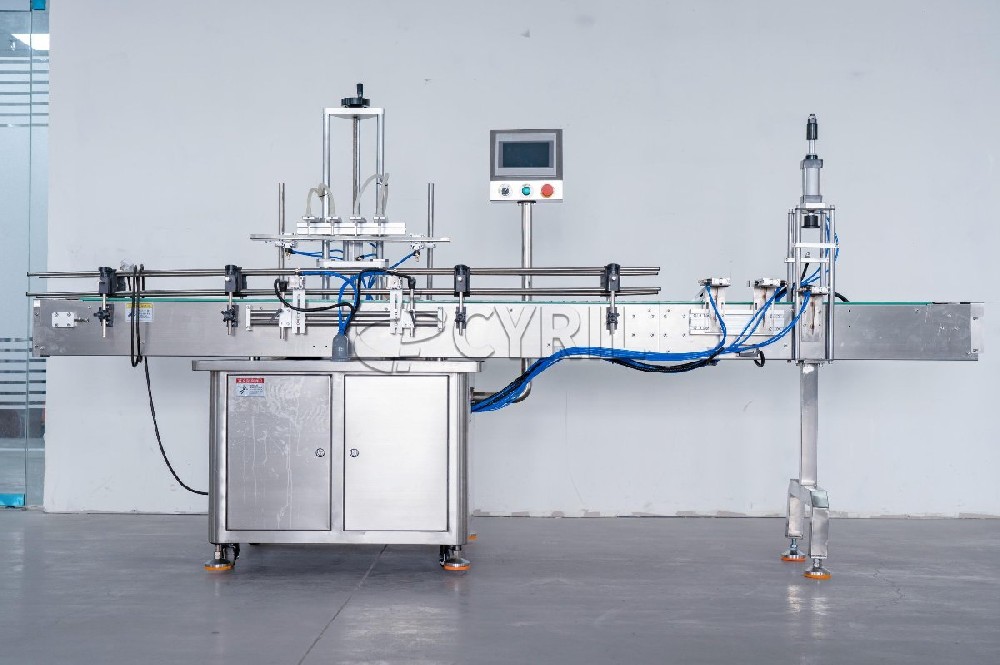
Maintenance and Care Specifications for Fully Automatic Four-Head Liquid Filling Machinery
The stable operation and service life of the equipment largely depend on the quality of routine maintenance and care. A well-designed cleaning schedule and regular inspections can effectively reduce failures and ensure filling accuracy and production efficiency. The following are the recommended maintenance points for this model.
I. Daily Cleaning Requirements
After each production run, the main parts of the equipment should be cleaned, with emphasis on friction rollers, conveyor belt surfaces, filling valve assemblies, and the exterior of the electrical control cabinet. Cleaning should be performed using alcohol or neutral commercial cleaning agents, applied with soft cloths. Avoid using tools or abrasive materials that may scratch surfaces.
II. Precautions During Cleaning
The following precautions should be observed during cleaning to prevent unnecessary damage to the equipment:
Do not use hard brushes or metal scrapers to clean equipment surfaces, as they may damage coatings or cause scratches.
Avoid cleaning agents containing acid, alkali, or strong corrosive components, which may corrode metal parts or sealing materials.
Do not use fragile or easily deformable plastic tools near moving parts to prevent debris from being left behind or causing jams.
III. Periodic Inspection and Maintenance
In addition to daily cleaning, it is recommended to inspect and maintain key components regularly according to the following schedule to ensure optimal operating condition:
Sensor Lens Cleaning: Use a soft brush or clean lint-free cloth to regularly clean the detection surfaces of photoelectric sensors and proximity switches to ensure accurate signal acquisition and prevent false actions or missed detections caused by dust buildup.
Rust Prevention: Stainless steel and iron components may be subject to corrosion over time due to environmental humidity or material contact. It is recommended to regularly apply anti-rust oil (such as OM-40 or equivalent) and spread it evenly with a soft cloth to form a protective layer. Special attention should be given to weld areas, threaded connections, and exposed machined surfaces.
Fastener Inspection: Regularly check all connecting bolts, nuts, and positioning screws for looseness, and retighten as necessary to prevent component displacement or abnormal noise caused by vibration.
Pneumatic System Maintenance: Check air line connections for leaks, ensure smooth cylinder operation, and regularly drain condensation and contaminants from air receivers and filter units to maintain compressed air quality.
By implementing the above cleaning and maintenance measures, equipment failure rates can be effectively reduced, service life extended, and long-term stable filling operations ensured.