

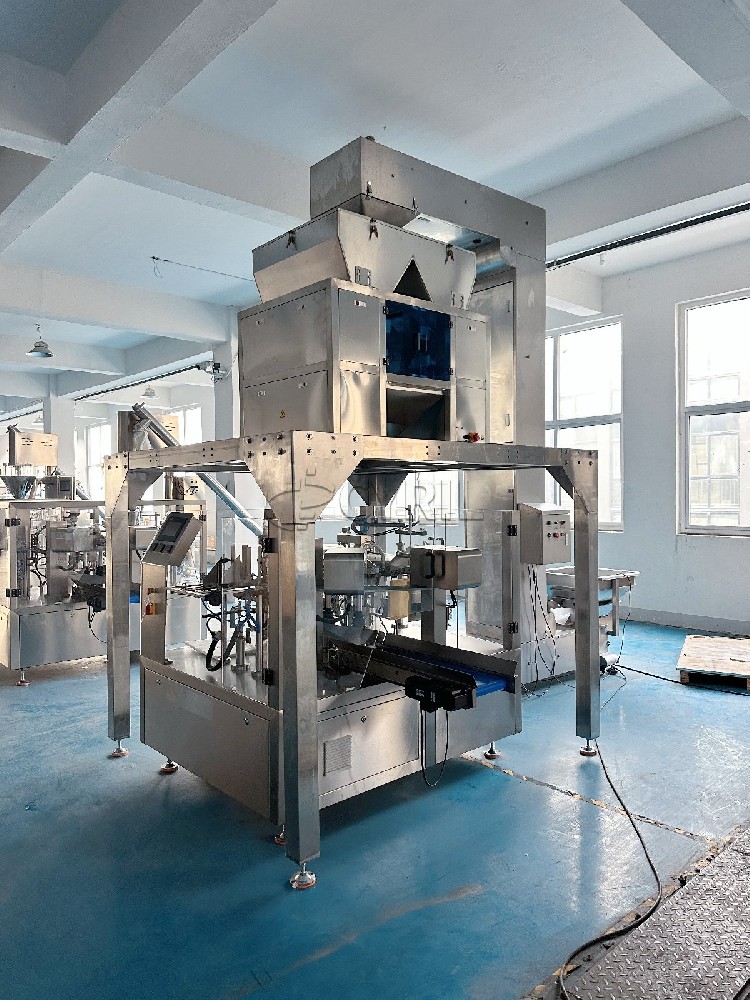
Bag Packaging Equipment Selection Guide: Type Analysis and Adaptation Points
In the packaging process, selecting the right equipment and supplier directly affects product protection and production line efficiency. Since different industries and materials have significantly varying packaging requirements, equipment selection should be based on a systematic evaluation of product characteristics, production targets, and site conditions.
I. Main Types of Packaging Equipment and Their Functional Roles
Based on packaging forms and process flows, common bag packaging equipment can be categorized as follows:
Capping Machines
Used for container mouth sealing, compatible with various cap types (e.g., screw caps, press-on caps, tamper-evident caps). Widely used in the sealing of liquids, sauces, and powder products. Their role is to quickly and reliably close containers, ensuring product safety.
Bagging Machines (Pre-made Bag Packaging)
Utilize pre-manufactured bags for product filling, suitable for solid products such as dried goods, snacks, and candies. Additionally, vertical form-fill-seal machines and horizontal form-fill-seal machines are available for vertical and horizontal bagging operations respectively, offering flexibility based on product shape and production line layout.
Carton Sealing Machines
Used for folding and sealing the top flaps of filled cartons with tape, keeping the cartons neat and dust-free. They are mainly divided into linear and rotary types—the former suitable for continuous conveyor lines, and the latter for space-constrained layouts.
Checkweighers
Used for online weighing of products during or after the packaging process, monitoring whether net content meets regulatory requirements. They can record batch data and reject non-conforming products, serving as an important quality control component in the production system.
II. Key Factors to Consider in Equipment Selection
Material Characteristics: Different material forms—powder, granules, liquid, paste—require different feeding methods, metering accuracy, and sealing structures.
Packaging Speed and Automation Level: Choose semi-automatic or fully automatic models based on production capacity requirements, and evaluate compatibility with upstream and downstream equipment.
Spatial Layout: Equipment dimensions and installation methods must match the existing workshop workflow; modular designs can be customized if necessary.
Regulatory and Safety Standards: Especially in food and pharmaceutical industries, equipment must comply with hygienic design and GMP standards.
III. Equipment Selection and Supplier Evaluation Strategy
After determining the specific equipment type, it is recommended to verify performance through sample testing, and to comprehensively evaluate the supplier's technical support capability, delivery lead time, and after-sales service responsiveness. A systematic selection process not only improves packaging efficiency but also helps reduce long-term operational risks.