

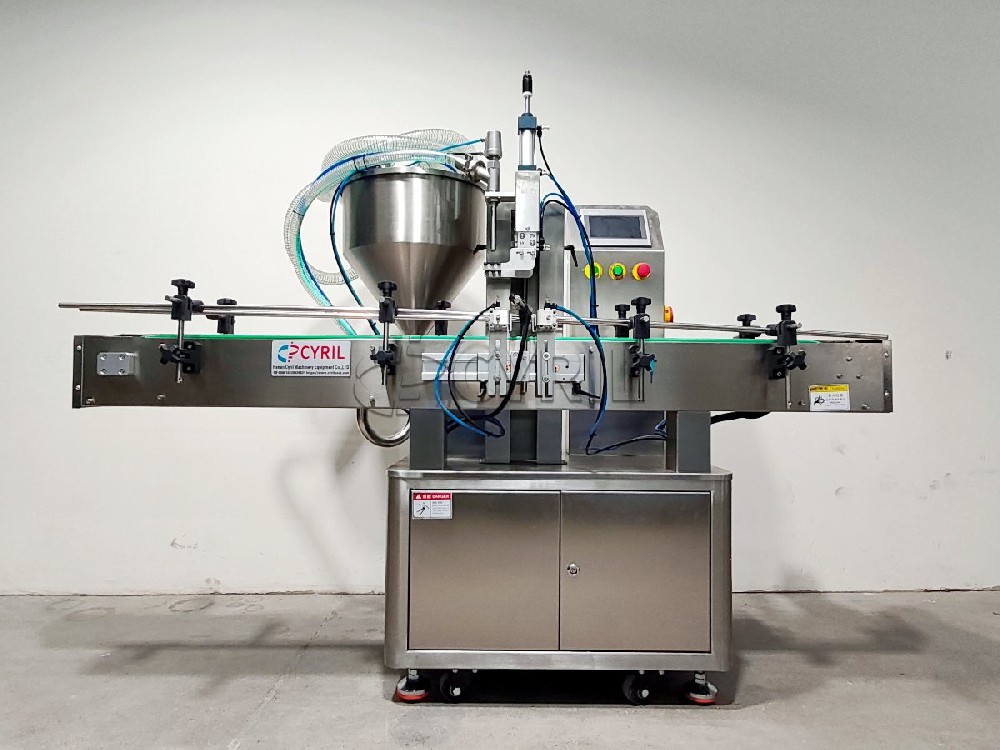
Liquid Filling Machines: The Hidden Pillar of Modern Life and Industrial Production
Although liquid filling machines are just a subcategory of packaging machinery, they are closely intertwined with daily life. From beverages and beer to condiments and daily chemical products, a vast number of liquid consumer goods rely on filling equipment for production. It can be said that liquid filling machines are not only a critical link in the packaging chain but also an essential infrastructure ensuring the supply of modern daily necessities.
From a technical classification perspective, filling machines are mainly divided into two major categories: liquid filling and paste filling. The former is suitable for materials with good flowability, such as purified water, carbonated drinks, fruit juices, dairy products, and alcoholic beverages; the latter is used for high-viscosity or particle-containing materials, such as sauces, honey, and creams. The vast majority of bottled liquid products commonly seen in daily life are quantitatively filled by liquid filling machines.
With the continuous improvement of socioeconomic standards, market demand for beverages, alcoholic drinks, and related liquid consumer products is steadily growing, placing higher requirements on production efficiency and accuracy. While the beverage industry has entered a mature development stage, the filling equipment manufacturing sector is still in a phase of rapid growth. Compared with earlier periods, domestically produced liquid filling equipment has made significant progress in automation, metering accuracy, and production line adaptability.
Against the backdrop of China's manufacturing industry transitioning toward higher quality development, the packaging equipment sector is simultaneously undergoing technological upgrades and structural adjustments. As an important link in the industrial chain, liquid filling machines will continue to see expanding market demand, and the role of domestic equipment manufacturers in technological innovation and service capabilities will become increasingly prominent.
In the future, to adapt to trends such as multi-variety, small-batch, and flexible production, equipment manufacturers will continue to develop more compact and efficient small liquid filling machines to meet the differentiated needs of enterprises of various sizes, driving higher levels of automation and intelligent upgrading in the liquid packaging process.