

Labeling Machine Selection Guide: Matching Equipment Type to Bottle Shape and Labeling Process
Labels are carriers of product information and important showcases of brand image. Clear, well-applied labels enhance consumer recognition and purchasing decisions. Given the variety of bottle shapes, label formats, and material requirements, labeling machine selection should be tailored to specific applications. Below is an overview of common equipment types and their applicable processes based on typical bottle configurations and labeling scenarios.
I. Round Bottle Labeling: Wraparound Labeling Is the Key Challenge – Selection Depends on Label Format
Round bottles have a larger curved surface, making labeling more complex than for flat bottles. Label formats vary widely, including wraparound labels, front-and-back labels, and single-side labels.
Front-and-Back Labeling Machine: Suitable for double-sided or single-side labeling on round bottles. The machine features three pneumatic cylinders that work in coordination—once the bottle reaches the station, it is secured, and the cylinders apply labels to both sides sequentially. Parameter adjustments via the control panel allow easy switching between single and dual-side modes, offering strong flexibility.
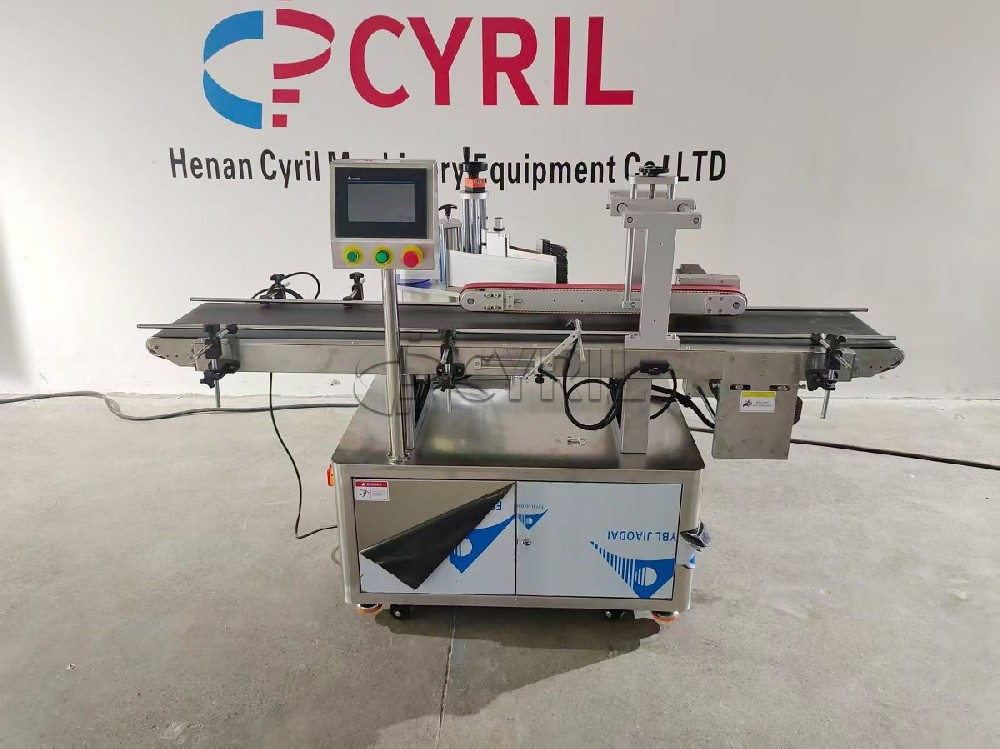
Belt-Type Labeling Machine: Designed specifically for single-side labeling and not suitable for wraparound applications. Its main structure consists of a belt and a pressure plate, with the gap between them adjusted based on bottle diameter (ensuring smooth passage without excessive looseness). The belt and pressure plate surfaces are soft; during labeling, bottles are lightly pressed and rotated forward by the belt. The process requires no stoppage, so its linear speed is significantly faster than front-and-back models.
II. Flat Bottles, Square Bottles, and Polygonal Bottles: Different Processes for Double-Side and Wraparound Labeling
Square, oval, and hexagonal containers are also common, with label formats similarly divided into wraparound, single-side, and double-side types.
Double-Side Labeling Machine: Equipped with two label separation plates. Upon detection by the photoelectric sensor, labels are dispensed through the plates, while brushes immediately press the label surface to remove air bubbles. This machine is suitable for single or double-side labeling on square or oval bottles but is not designed for wraparound labels.
Wraparound Labeling Machine: Commonly used for round, square, or hexagonal bottles. The main challenge is avoiding wrinkles at the corners. The machine uses an upper clamping mechanism to hold the bottle while a rotary unit at the base spins the container to apply the label. A roller simultaneously presses the label to eliminate bubbles and ensure smooth, wrinkle-free wraparound application.
III. Dual-Purpose Machine for Round and Flat Bottles: Cost-Effective Integrated Design
To accommodate both common bottle types, some equipment integrates two labeling systems into one body, allowing independent switching between round and flat bottle labeling modes as needed. This reduces equipment investment and floor space.
IV. Labeling Non-Bottle Products: Applicable to Boxes, Caps, and Bags
In addition to bottles, labels are also applied to boxes, caps, and pouches. Such applications are relatively simple in structure, typically using a single label separation plate as the core component. A photoelectric sensor beneath the plate detects the object, dispenses the label, and brushes press the label flat to remove bubbles. This type is suitable for top-labeling on flat surfaces, such as lids, carton tops, and pouch seal areas.
The above equipment categories are intended to help users quickly identify the most suitable labeling solution based on bottle shape, label format, and production speed requirements, thereby improving labeling quality and overall efficiency.