

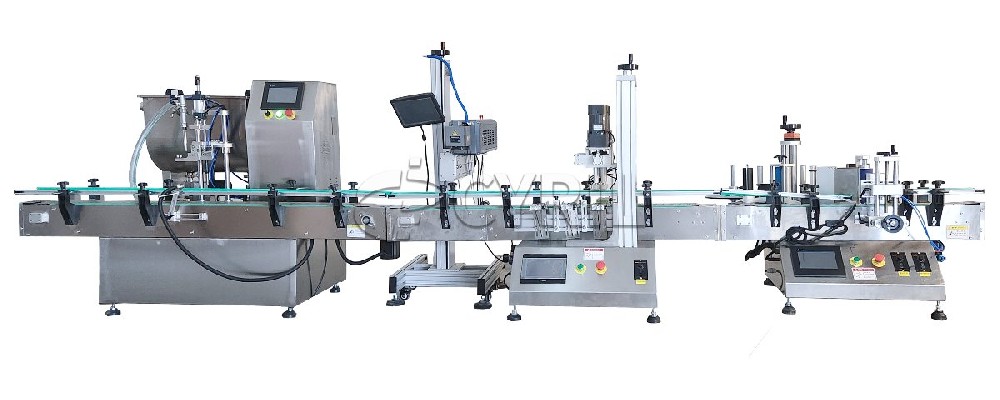
Packaging Automation Upgrade: Fully Automated Production Lines Leading Industry Transformation
As customer demands continue to rise in terms of product quality, performance, packaging precision, and appearance design, the packaging machinery industry is experiencing rapid growth, with various types of equipment being continuously developed to meet increasingly diverse production needs.
Driven by the wave of intelligentization, packaging machinery is evolving from standalone equipment to systematic, integrated solutions. The deep integration of automation and intelligent technologies not only helps enterprises improve production efficiency and achieve cost reduction but also drives the entire industry to accelerate structural adjustment and upgrading to adapt to the rapidly changing market environment.
The emergence of fully automatic packaging lines is a typical example of this trend. They not only significantly enhance the automation level of packaging processes to meet high-volume continuous production demands but also strengthen packaging safety and accuracy through precise control and intelligent monitoring systems, greatly reducing reliance on manual labor.
With ongoing technological advancements, the production sector is imposing higher requirements on packaging technologies and equipment, and market competition is becoming increasingly fierce. In this context, highly integrated automatic packaging lines are gaining prominence and becoming a key force driving the overall progress of the packaging machinery industry.
Currently, China's manufacturing sector is at a critical stage of transformation and upgrading. The food packaging industry is gradually shifting from traditional mass production to flexible production models tailored to market or customer needs. Design and control systems are moving from being fragmented and independent to integrated and unified. Global sourcing and collaborative production are becoming the new norm, and manufacturers are placing greater emphasis on quality, efficiency, cost, and safety. These changes will strongly promote the in-depth application of information and intelligent technologies in the food industry.
From an international perspective, the packaging industry in developed countries has largely achieved full-process automation, with automatic packaging lines demonstrating clear advantages in efficiency improvement and cost control. As one of the fastest-growing economies in the world, China is emerging as a global manufacturing and packaging hub, and market demand for various types of automatic packaging lines will continue to expand.
However, it must be acknowledged that compared with advanced foreign enterprises, domestic manufacturers still have gaps in terms of line consistency, equipment stability, and service life. To seize the opportunities presented by rapidly growing domestic packaging demand, relevant enterprises must strengthen technological R&D and product innovation to improve the overall performance of specialized production lines.
It is worth noting that the greatest value of automated packaging lines lies in the fact that only one person is needed to manage the entire line's operation, greatly freeing up human resources and providing strong support for enterprises to handle complex production scenarios such as multi-variety and small-batch runs. This is not just an improvement in production efficiency but also a qualitative leap in a company's flexible response capability and market competitiveness.