

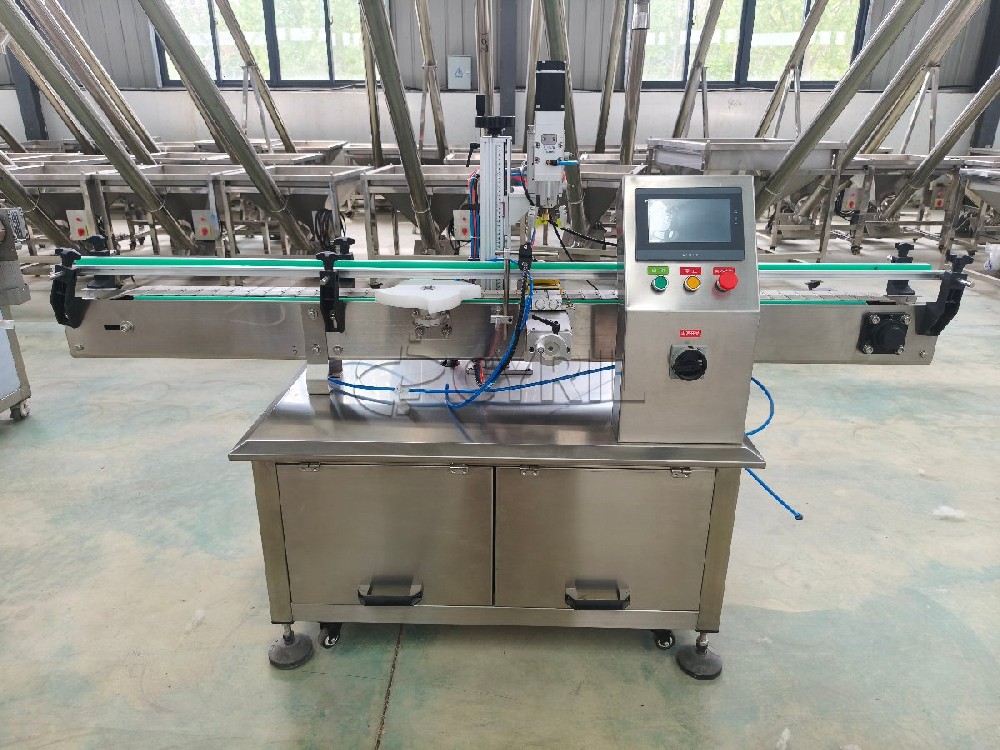
Optimization Strategies for Capping Operations in Food Packaging Lines
In food packaging, the capping machine plays a critical role in sealing bottle mouths and preventing contamination. Its performance directly affects product freshness and market competitiveness. To achieve efficient and stable capping operations, systematic optimization is required across multiple dimensions, including equipment principles, operating parameters, maintenance systems, component compatibility, and personnel capabilities.
I. Understanding Equipment Operating Logic
Capping machines secure caps onto bottle mouths through rotational motion, with results influenced by various factors such as rotation speed, applied pressure, and container material. Excessive tightness may deform plastic bottles or cause micro-cracks; insufficient tightness compromises the seal, allowing oxygen and moisture to enter and threaten product quality. Only with a thorough understanding of the equipment's operating logic can targeted adjustments be effectively made.
II. Setting Capping Speed Scientifically
Faster speed is not always better. Excessive speed may prevent proper cap engagement or cause wear, while overly slow speed reduces overall line efficiency. The optimal capping speed should be determined through testing based on cap material and bottle mouth structure, balancing sealing quality with production efficiency.
III. Establishing a Periodic Maintenance System
After prolonged operation, issues such as component wear, debris accumulation, and insufficient lubrication are inevitable. A clear maintenance schedule should be established, including regular cleaning of capping heads, inspection of transmission components, and lubrication replenishment, to reduce unexpected downtime and extend equipment service life.
IV. Ensuring Cap and Bottle Compatibility
Caps of different materials, weights, and sizes have varying requirements for capping processes. Lightweight caps may shift at high speeds and require appropriate positioning devices; irregular bottle mouths demand precise adjustment of clamping mechanisms. When selecting components, the compatibility between caps and bottles must be carefully considered to avoid sealing defects caused by mismatched parts.
V. Strengthening Operator Training
Equipment performance is closely related to operator proficiency. Systematic training should cover standard operating procedures, abnormal condition identification and response, and basic maintenance skills, enabling operators to independently handle common issues and reduce quality fluctuations caused by human error.
VI. Implementing Real-Time Monitoring and Feedback Loops
Real-time tracking of key data such as capping torque, speed, and fault alerts helps detect anomalies early and enables rapid intervention. At the same time, regularly collecting operator feedback and combining it with actual operational data supports continuous improvement, steadily enhancing the overall performance of the capping process.