

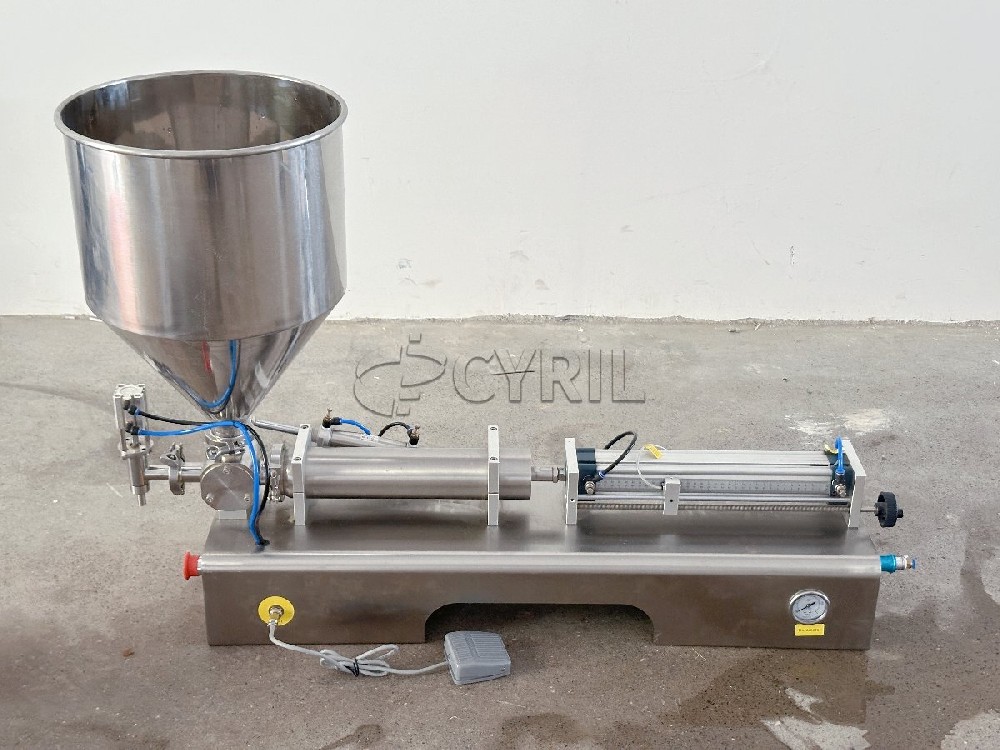
Equipment Operation Precautions and Influencing Factors
This series of filling machines is specifically designed for quantitative filling of liquids, low-concentration pastes, and sauce-like materials. Do not use for other purposes. To ensure operational safety and long-term stable equipment performance, strictly observe the following safety guidelines and operational instructions during use.
I. Air Supply and Power Requirements
The equipment must be operated with power and air supply parameters that meet specifications. During continuous operation, air pressure should remain stable to avoid fluctuations that may affect filling accuracy or cause abnormal cylinder operation. Fully pneumatic explosion-proof models do not require external power, but still require clean air supply with adequate pressure.
II. Disassembly, Cleaning, and Maintenance Safety
Before disassembling for cleaning or performing maintenance, always shut off both air supply and power, and confirm that no residual pressure remains in the system to prevent accidental startup that could cause personal injury or equipment damage.
III. Machine Cleaning and Electrical Protection
Electrical control components are located at the rear of the machine (near the control buttons) and beneath the machine frame. Never rinse the machine body directly with water, as this may cause short circuits, electric shock, or damage to control components. It is recommended to use a damp cloth for cleaning, avoiding electrical interfaces and button areas.
IV. Grounding Protection Requirements
To prevent electric shock, the machine must be equipped with a reliable grounding device. Use a power outlet with a ground connection, or install a separate grounding wire on the machine body to ensure static electricity and leakage current are safely discharged.
V. Electrical Maintenance Precautions
Even after the power switch is turned off, residual voltage may remain in certain control circuits. When inspecting or repairing control wiring, always unplug the power cord to prevent live-work accidents.
VI. Personal Safety During Operation
During operation, do not place your eyes close to the filling nozzles to avoid injury from splashing material. Also, keep hands away from the cylinder movement area to prevent pinching.
VII. Pre-Operation Cleaning
Before formal filling, it is recommended to perform an initial cleaning of internal piping using a neutral detergent or mild soap solution, followed by rinsing with clean water. This prevents residual oil or foreign matter from contaminating the product or damaging equipment components.
VIII. Hopper Protection
When not in use, the hopper should be covered to prevent dust and debris from entering, which could contaminate the material or clog the filling system.