

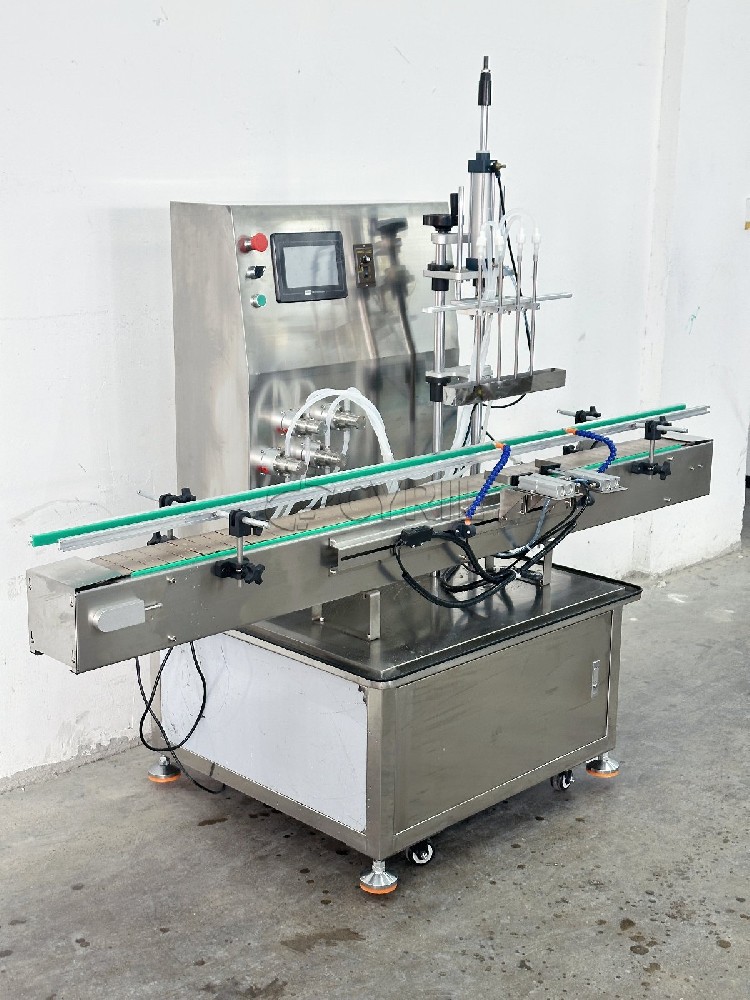
Proper maintenance and cleaning not only extend the service life of the equipment but also serve as important prerequisites for ensuring filling accuracy and product hygiene. The following outlines the maintenance points and cleaning procedures for this machine model.
I. Machine Surface Maintenance
The equipment housing is made of stainless steel. During daily use, avoid scratching the surface with sharp or hard tools to prevent damage to the protective layer. For cleaning, it is recommended to use a soft cloth with a neutral cleaning agent to wipe the surface, maintaining a neat appearance and preventing long-term residue adhesion.
II. Cylinder Component Precautions
The cylinder has been pre-lubricated with a specialized lubricant prior to delivery, and the internal seals are already conditioned to their initial lubrication state. During operation, do not disassemble the cylinder or add additional lubricant, as this may damage the sealing structure or alter operating characteristics, potentially leading to abnormal performance or leakage.
III. Pre-Cleaning Preparation
Before cleaning, drain any residual material from the material cylinder (Component 15) and the three-way valve (Component 18) to avoid mixing. Then fill the cleaning tank with cleaning medium. Warm water is recommended as the base cleaning solution. If enhanced cleaning is required, neutral soapy water, alcohol, or other non-corrosive cleaning agents may be added as appropriate. Acidic or strongly alkaline solutions must not be used.
IV. Routine Cleaning Procedure
Before starting the cleaning process, inspect the piston seals for integrity; replace any damaged seals first. Start the machine in cleaning mode, allowing the cleaning solution to circulate through the system until the discharged liquid runs clear. This method is suitable for routine product changeovers or short-term stoppages, offering simple operation and high cleaning efficiency.
V. Deep Cleaning Requirements
For product changes requiring higher hygiene standards or thorough cleaning after extended use, all material-contact components should be disassembled and cleaned individually, including: the material cylinder inner wall, piston and seals, three-way valve body, filling nozzle, feed pipe, and discharge pipe. After cleaning, carefully inspect all seals—including piston seals and valve flat seals—for signs of aging, deformation, or cracks. Replace any damaged seals promptly to ensure sealing reliability and filling accuracy.