

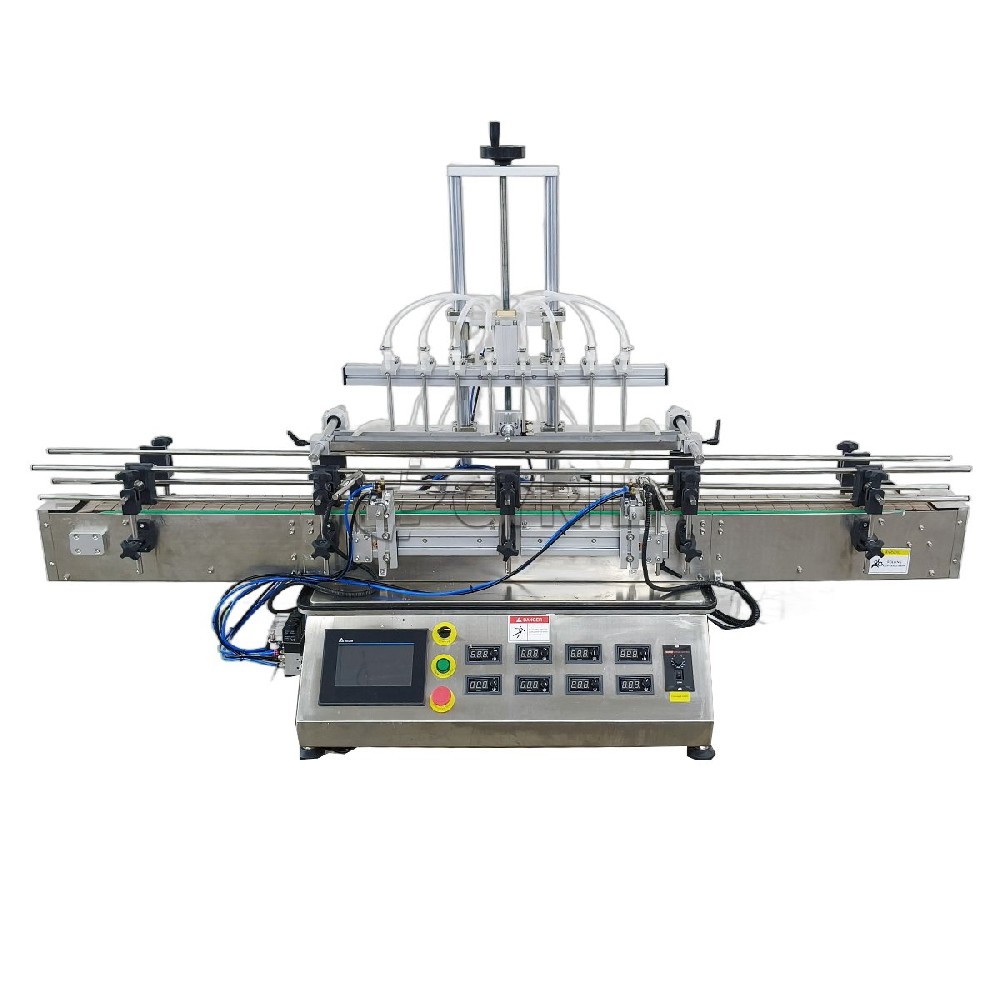
Eye Drop Filling Line Process Flow and Equipment Configuration Analysis
As sterile preparations that come into direct contact with the eyes, eye drops have stringent requirements for environmental cleanliness, material protection, and equipment stability during the filling process. A complete eye drop filling line typically covers core processes including bottle unscrambling, filling, capping, labeling, and coding, forming a closed-loop from empty bottle input to finished product output.
I. Container Preparation and Material Handling
Common containers for eye drops include glass bottles and plastic bottles. Prior to production, containers and associated utensils must be cleaned and sterilized to ensure a sterile state. The preparation of the medicinal solution is carried out in a clean environment. Depending on formulation stability, either terminal sterilization or aseptic filling processes can be selected. For more stable products, bulk bottling followed by sterilization and subsequent aseptic sub-packaging can be adopted to reduce contamination risks during operation.
II. Production Line Operation Flow
After the equipment is started, empty bottles are fed orderly into the conveying track by the bottle unscrambling mechanism. The conveyor belt moves the bottles into the filling positioning turntable. At the filling station, photoelectric sensors detect the bottles and trigger the metered filling action to complete quantitative filling. After filling, the bottles are transferred from the positioning turntable to the indexing turntable, where they undergo intermittent stepping motion to sequentially complete rubber stopper application, cap sorting and tightening, and finally sealing via crimping. The finished bottles then enter the discharge track and are conveyed to the labeling machine for label application (coding devices can be added as needed), and finally collected by the bottle collection table. The entire production line operates continuously and automatically.
III. Equipment Application Fields and Industry Value
This filling line is not only suitable for eye drop preparations but also widely used in biopharmaceuticals, special medical foods, health products, and cosmetics. Its modular structural design allows flexible adjustments based on different bottle types, cap types, and capacity requirements, making it particularly suitable for small and medium-sized enterprises to improve production line automation and reduce manual intervention.
IV. Industry Development Trends
With the continuous increase in packaging quality and production efficiency requirements in the pharmaceutical and health product sectors, filling equipment is evolving toward multi-functional integration, high operating efficiency, and low energy consumption. In recent years, domestic filling machinery has made significant progress in control precision, material technology, and system stability, providing strong support for compliant production and capacity expansion in the pharmaceutical and health industries.