

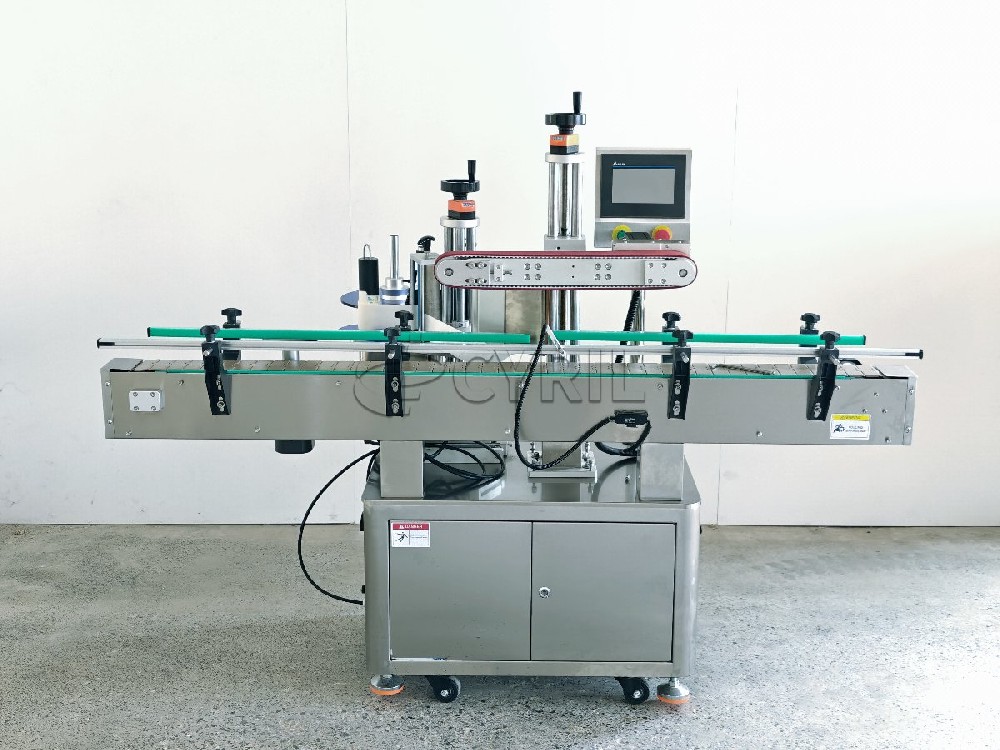
Common Fault Troubleshooting and Maintenance Guide for Fully Automatic Labeling Machines
As a core piece of equipment on production lines, fully automatic labeling machines feature high speed, high precision, and intelligent capabilities, and are widely used in industries such as electronics. However, various faults may inevitably occur during long-term operation. The following summarizes common faults and corresponding solutions from three aspects: software, hardware, and operational procedures.
I. Common Software Faults and Solutions
Unable to Read Video: Check whether the camera wiring is loose and reconnect it securely; if the issue persists, close and restart the software.
Servo Alarm: Refer to the servo parameter alarm guide to troubleshoot, then click the "Servo Reset" button in the software.
Software Unresponsive or Buttons Not Working: Try closing and restarting the software; if it still does not work, restart the computer and reopen the software.
II. Common Hardware Issues and Improvement Measures
Abnormal Sensing (Label applied before board is in place, or board not discharging) : Observe whether the position sensor is working properly and adjust the sensing distance. If the three-section guide rail shows abnormal board feeding/discharging, it may be a sensor issue, or the suction nozzle may be touching the rail sensing area during X-axis movement.
Abnormal Installation Angle (Product angle deviation) : Check whether the U-axis synchronous wheel set screw is loose and tighten it to resolve the issue.
Label Accumulation (Label discharge position exceeds fiber range) : Check whether the fiber sensor's sensing value is set too high; lower it appropriately to shorten response time.
Unstable Clamping Plate Grip: Reprocess the clamp plate and apply a layer of adhesive at the clamping area to enhance friction and stability.
III. Software Process and Workflow Improvements
Abnormal Board Feeding/Discharging: Observation shows that if the board cart moves at inconsistent speeds or gets stuck during rail switching, abnormal board flow may occur. Modify the software workflow to ensure that the second rail is completed and the third position sensor is triggered before the board enters the first rail, effectively resolving the issue.
Unable to Automatically Pick Up Next Label: This is usually caused by abnormal software process settings and requires process parameter adjustment. If the issue recurs after normal production of six lines for a period of time, add a time delay improvement.
Abnormal Board Positioning for Photo Capture: Significant pixel value differences between board-in-place and not-in-place states may cause label placement errors. An improvement is to add a delay after the board is in place before taking the photo to ensure stable positioning before labeling.
Conclusion
The stable operation of fully automatic labeling machines depends on timely and accurate fault diagnosis and handling. By making targeted optimizations to software, hardware, and workflow, downtime can be significantly reduced, improving equipment efficiency and production quality.