

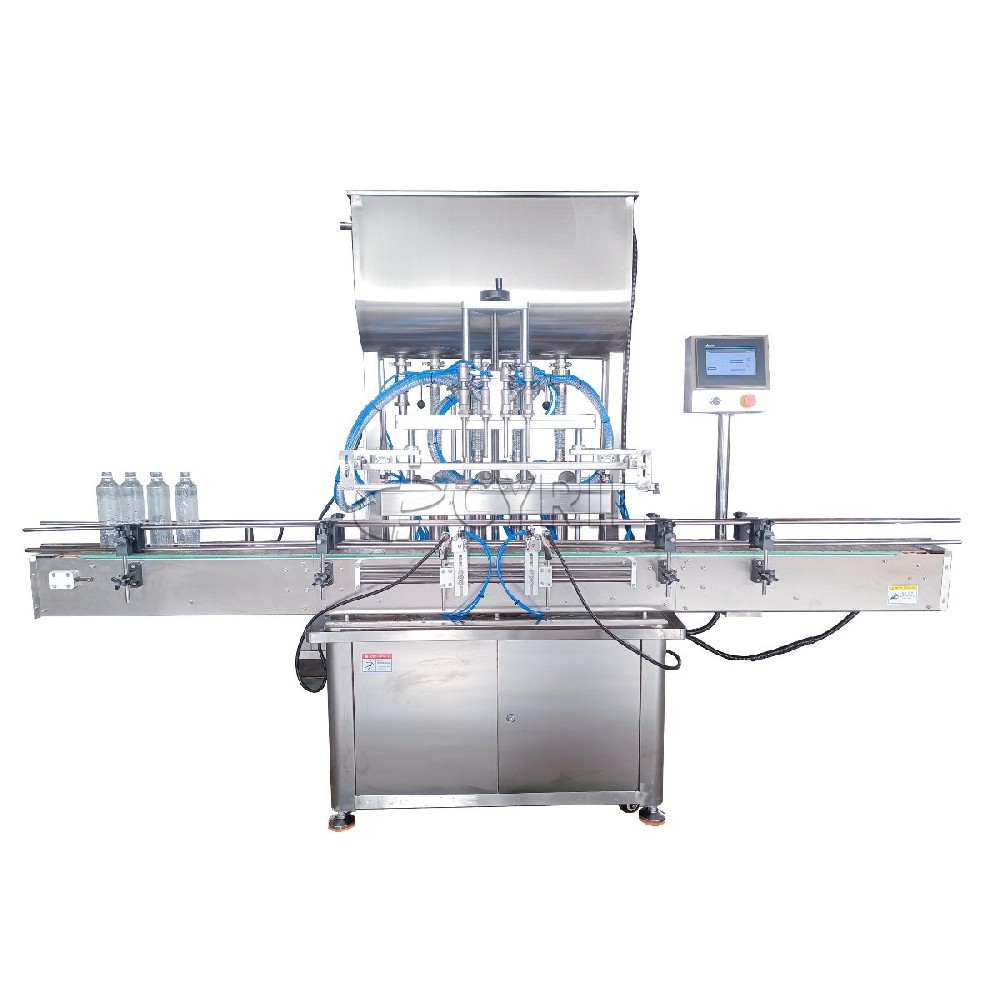
Causes and Solutions for Frequent Filter Clogging
Filters play a critical role in filling production lines by removing impurities from materials and protecting core components such as filling nozzles and metering pumps. However, frequent filter clogging is a common issue faced by many enterprises. The main causes include excessive impurities in the material, improper filter selection, and inadequate cleaning and maintenance. To resolve this problem, measures should be taken from three aspects: material pretreatment, filter selection, and routine maintenance.
I. Strengthen Material Pretreatment
If the material contains a large amount of impurities or particles, it is the primary cause of clogging. A pretreatment step should be added before filling, using a multi-stage filtration approach—first coarse filtration to remove large particles, then fine filtration to remove smaller particles—ensuring that the impurity content in the material is controlled within the filter's capacity. At the same time, storage tanks should be cleaned regularly to remove sediment and impurities from the bottom, reducing the amount of impurities entering the filter at the source.
II. Select the Appropriate Filter
Whether the filter selection is reasonable directly affects the frequency of clogging. If the filtration precision is too high, it may lead to slow filtration and faster clogging; if the precision is too low, it cannot effectively intercept impurities. The appropriate filtration precision should be selected based on material characteristics and filling accuracy requirements. In addition, filters with larger filtration areas and easy-to-clean structures are preferred. For high-viscosity materials, filters with high temperature resistance and good viscosity resistance should be chosen to reduce the risk of clogging.
III. Strengthen Routine Maintenance Management
Daily maintenance is key to ensuring the long-term stable operation of filters. After each day's filling work, the filter element should be cleaned promptly to remove surface impurities and residual material. A thorough cleaning should be performed weekly; if the filter element is worn or severely clogged, it should be replaced immediately. Operators should regularly check the pressure at the filter's inlet and outlet. If the pressure difference increases significantly, it indicates that the filter element is clogged and requires immediate attention. In addition, seals should be regularly inspected to prevent impurities from bypassing the filter due to poor sealing and entering the equipment.
IV. Establish Records and Continuous Improvement
It is recommended to establish a record of filter clogging and maintenance activities, which helps analyze clogging patterns and optimize material pretreatment processes accordingly, reducing the frequency of clogging at the source.
In summary, by strengthening material pretreatment, selecting filters scientifically, and strictly implementing routine maintenance, the frequency of filter clogging can be significantly reduced, ensuring stable and efficient operation of the filling production line.