

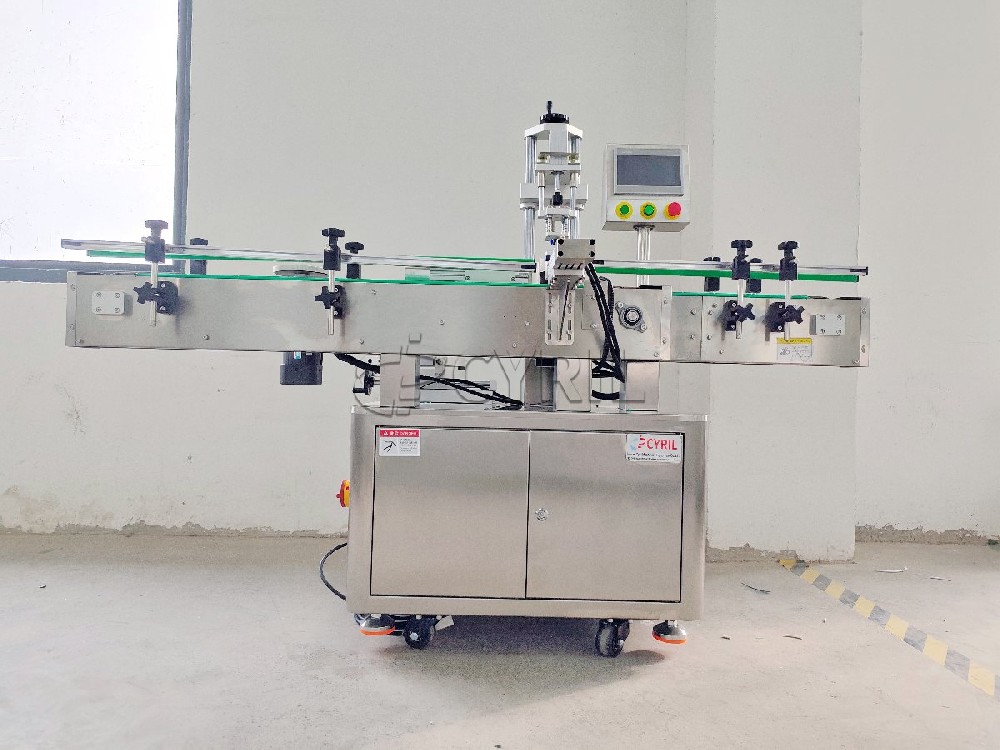
Overview of Labeling Machine Application Fields: Multi-Industry Penetration from Food to Batteries
With the continuous maturation of labeling technology, labeling equipment has become widely integrated into multiple manufacturing sectors. Whether for information identification, brand display, or anti-counterfeiting traceability, labels are serving increasingly diverse functions across different industries. Below are five major industries where labeling machines are primarily applied, along with their typical requirements:
I. Food Industry
The food market is highly competitive, and brands rely on labels to convey product information, promotional content, and usage instructions. The variety of packaging forms and frequent specification changes require labeling equipment with strong adaptability to handle containers of different materials and shapes while maintaining both speed and accuracy.
II. Beverage Industry
Beverage production lines typically demand high labeling speeds and must accommodate multiple labels per bottle with precise positioning. Label materials and shapes often change with product strategies, requiring equipment capable of rapid changeovers and consistent label placement without deviation at high speeds.
III. Pharmaceutical Industry
Pharmaceutical packaging imposes stringent requirements on label information accuracy and traceability to meet regulatory compliance. Labeling machines must support high-precision positioning and can integrate with upstream and downstream processes such as visual inspection and bottle loading, forming a complete functional chain with traceable labeling data.
IV. Medical Industry
The use of self-adhesive labels in the medical supplies sector is expanding from simple identification to functional applications such as seal indicators and usage tracking. Equipment configurations need to be customized based on label materials and application scenarios to ensure reliable adhesion without affecting product performance.
V. Battery Industry
The battery manufacturing sector widely uses labeling machines for wrapping shrink labels. In addition to high-speed operation, these machines must maintain smooth label seams and address safety concerns such as short-circuit prevention. Some models also integrate label shrinking functions to meet specific battery packaging requirements.
As labeling technology continues to improve in precision, speed, and intelligent control, its application scope is expected to further expand into more emerging industries, becoming an important supporting equipment for product packaging and information management.