

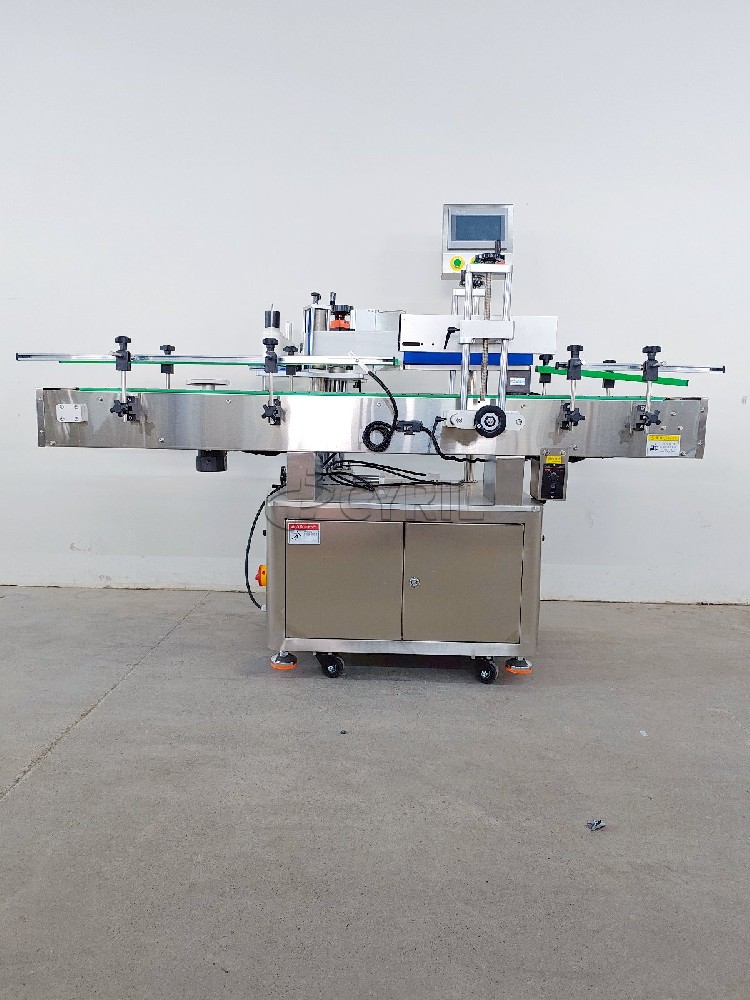
Operational Guidelines for Achieving High-Quality Labeling Results with Labeling Machines
Labeling machines are core equipment in product packaging, and labeling quality directly affects product appearance and brand image. Improper operation may lead to edge curling, misalignment, or weak adhesion. To achieve consistent and high-quality labeling results, strict control of the entire process is essential.
I. Before Operation: Preparation and Inspection
Equipment Pre-Cleaning and Inspection: Before starting, check that power and air supply (if pneumatic) are stable, and ensure the conveyor belt is level. Remove residual adhesive and label debris from labeling rollers and label shafts to prevent jamming. If the labeling roller surface is worn, it should be smoothed or replaced to ensure uniform pressure.
Label Selection and Handling: Choose self-adhesive labels that match the product material and storage environment. Ensure labels are free from creases, tears, or color inconsistencies. When loading, align the roll with the reference line and adjust tension to a moderate level—excessive tension may tear thin labels, while insufficient tension may cause wrinkling. A manual pull test can help determine proper tension.
Product Pre-Treatment: Ensure the labeling surface is dry, free from oil, moisture, or debris. Failure to do so will reduce adhesion and cause edge curling or detachment.
II. During Adjustment: Precise Parameter Matching
Labeling Position Calibration: Adjust sensors and labeling head angle according to product shape. For round bottles, align the sensor with the reference point (e.g., bottle shoulder mark); for flat bottles, adjust the head angle to ensure the label is centered, with deviation within 1mm. For irregular products, fine-tune the fixture to match the contour.
Pressure and Speed Synchronization: Adjust labeling pressure through sample tests—insufficient pressure causes edge curling, while excessive pressure wrinkles labels or deforms products. Speed must match the production line; excessive speed delays label delivery, while slow speed causes overlap. Recommended speed is 10–20 pieces per minute, depending on label size.
III. During Operation: Standardized Procedures to Avoid Abnormalities
Do not adjust parameters mid-operation; wait for a full cycle before making fine adjustments to avoid a surge in defective products. In case of label breakage or jamming, immediately stop and power off, clear debris, and restart only after resolving the issue. Operators should not wear thick gloves near sensors and should avoid loose clothing to prevent entanglement.
IV. Daily Maintenance: Ensuring Long-Term Stability
Clean labeling rollers and conveyor belts daily using a dedicated adhesive remover. Weekly, check sensor sensitivity and clean dust with a lint-free cloth. Monthly, inspect wear on rubber rollers and feed wheels; replace if wear exceeds 1mm to prevent uneven pressure and weak adhesion.
Conclusion
Stable labeling machine performance requires comprehensive control from pre-operation preparation, calibration, process management, to daily maintenance. Attention to detail at every stage ensures labels are applied flat, firmly, and neatly.