

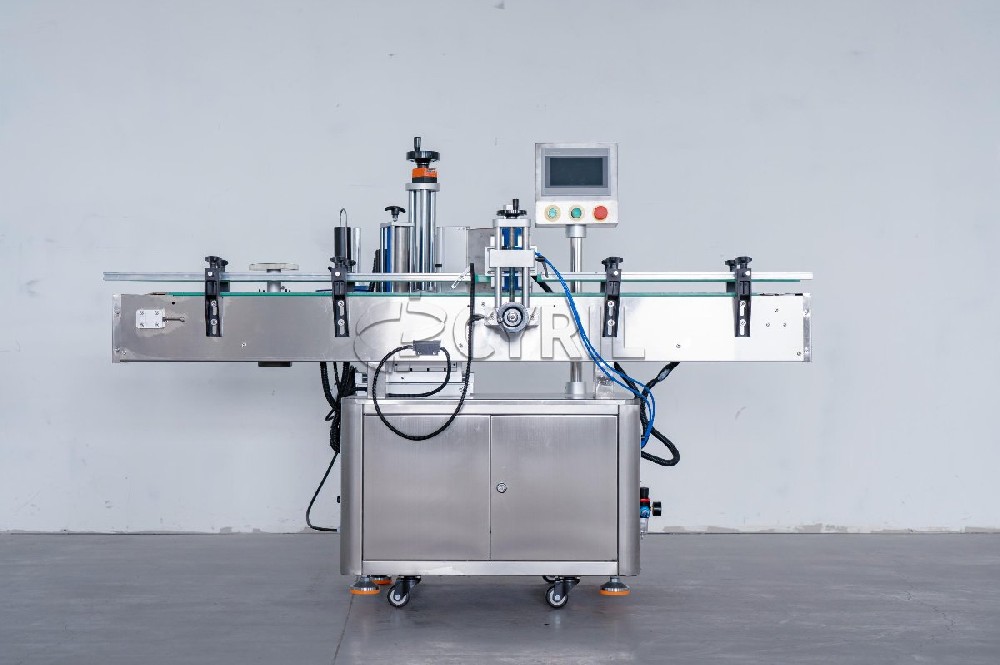
Round Bottle Labeling Machine: Components, Working Principle, and Operation Process
A round bottle labeling machine is equipment used to automatically apply labels onto cylindrical containers such as bottles, jars, and tubes. It is widely used in industries such as food, beverages, pharmaceuticals, and cosmetics. By automating the labeling process, it significantly improves production efficiency and reduces labor costs.
I. Main Components
Bottle Separating Wheel: Separates and arranges bottles from the infeed table into the correct position, ensuring orderly entry into the conveying system before labeling.
Adjustable Guide Rails: Guide bottles through the labeling machine and can be adjusted to accommodate different bottle sizes and shapes, keeping bottles properly positioned during labeling.
Label Holder: Holds the label roll and ensures smooth label dispensing without interruption.
Press Roller: Applies pressure to the label during application, ensuring firm adhesion without bubbles or wrinkles.
Conveyor Belt: Transports bottles through the machine; speed is adjustable to suit different labeling requirements.
Control Panel: The main operator interface for setting parameters such as label size, bottle specifications, and labeling speed.
Electrical Cabinet: Houses electrical components; some models are equipped with a frame and wheels for easy mobility.
II. Working Principle and Operation Process
The round bottle labeling machine operates through the coordinated work of the conveying system, label dispenser, and labeling head.
Bottle Loading: Bottles enter the labeling system via the conveyor belt, where they are automatically rotated and precisely aligned.
Label Dispensing and Application: The label dispenser releases labels onto the bottle surface, and the labeling head uses a combination of pressure and adhesive to firmly attach the label to the bottle body.
Inspection and Calibration: After labeling, the system automatically checks whether the label position and alignment are correct. Many machines are equipped with optical sensors to monitor bottle position and orientation in real time, ensuring labels are applied in the correct position and direction.
Unloading: Labeled bottles are discharged from the machine and typically sent to the next packaging or transportation stage.
III. Labeling Methods and Adaptability
Round bottle labeling machines are compatible with various labeling methods, including pressure-sensitive, hot-melt, and glue-based systems. They can handle different label materials such as paper, vinyl, and polyester. Additionally, they are capable of applying various label types, including product information, brand logos, and warning labels, to meet the needs of different industries.
Conclusion
With their modular structure, flexible adjustability, and stable labeling performance, round bottle labeling machines have become indispensable equipment on modern production lines. Proper selection and correct operation can effectively enhance production efficiency and product quality.