

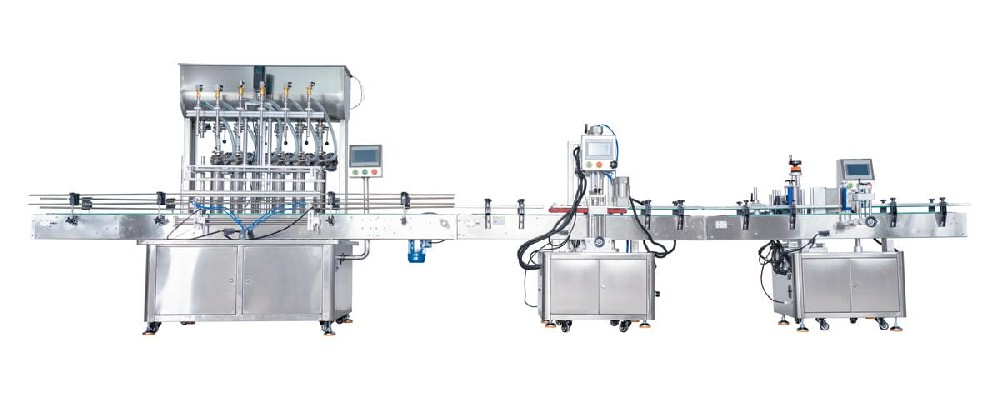
In the modern food industry, filling and capping machines have become key equipment for improving production efficiency and ensuring product quality. They are mainly used to automatically fill liquid or semi-liquid food products (such as beverages, condiments, and sauces) into containers and tighten the caps, enabling a fast, hygienic, and highly automated production process.
Firstly, these machines significantly improve production efficiency by completing a large number of filling tasks in a short time, thereby shortening the production cycle. Secondly, automated operation reduces human interference, ensures consistent and accurate filling volumes, and is equipped with inspection systems to detect and reject defective products, effectively guaranteeing food quality and safety. Furthermore, using filling and capping machines saves labor costs, allowing employees to focus on more creative tasks such as product development and process optimization.
In terms of market competitiveness, the equipment offers high flexibility, enabling rapid output adjustments to meet changes in demand and helping businesses seize market opportunities. Modern models are also designed for easy cleaning and maintenance to prevent contamination risks. At the same time, they adopt energy-efficient motors and environmentally friendly materials, reducing resource waste and demonstrating corporate social responsibility.
In conclusion, filling and capping machines not only improve efficiency and reduce costs but also help businesses achieve sustainable development in a fiercely competitive market, making them an ideal choice for upgrading the food industry.
Let me know if you need a more formal or technical version for a specific audience.